Welcome Families to the 2016-2017 School Year

“Individually, we are one drop. Together we are an ocean.”Ryunosuke Satoro

Hello, families! As many of you may already know, my name is Alicia Carroll and I am the Director of Science, Technology, and Engineering for the East Boston Early Education Center School. I have been teaching in Boston Public Schools as an early childhood educator for the past 17 years. I have worked as a new teacher developer, supporting and mentoring new teachers in the district for the last 8 years. I’m looking forward to working with all of the classrooms, as well as and meeting and collaborating with families. Here’s a quick snapshot of what we will be exploring in science for the 2016-2017 school year!

Grade 1 Science
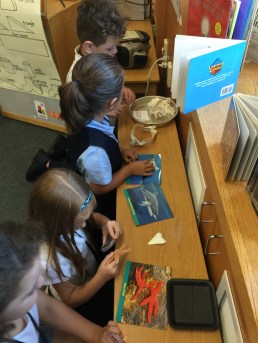
IMG_6635This year, science students will be engaged in active learning. Grade 1 students’ first unit will be on organisms, where they will study simple organisms at a deeper level. This unit provides hands-on experiences that help students develop an understanding of and sensitivity to living things. Students create and maintain a woodland habitat containing pine seedlings, moss, pill bugs, and bess beetles or millipedes. They also set up and observe a freshwater habitat into which they introduce Elodea and Cabomba plants, pond snails and guppies. With both plants and animals in each habitat, students have the opportunity to observe how these organisms coexist.  Through studying the needs and characteristics of a variety of organisms, students are able to draw conclusions about how plants and animals are similar and different. In a final lesson, students apply to humans what they have learned about organisms – meaning they will be exploring how human beings are similar to and different from other living things.

The second unit students will study is solids and liquids. Students investigate the
similarities and liquids in a variety of common solids and liquids. First, they observe, IMG_6553describe, and compare a collection of solid objects, focusing on such properties as color, shape, texture and hardness. They also perform tests to determine whether the objects roll or stack and float, or sink, as well as whether they are attracted to a magnet. Investigations of liquids center on how various liquids look and feel, their fluidity, how they mix with water, and their degree of absorption. In the final lesson, students compare the properties of solids and liquids and identify if they are similar or different.

The last unit is weather. This unit introduces students to the concept of weather and how it affects their lives. Using a variety of tools, students observe, discuss, measure, and record data on cloud cover, precipitation, wind and temperature. They learn how to read a thermometer and construct a rain gage to measure precipitation. They also study cloud formations, and use a wind scale to estimate the speed of wind. To apply their new skills and knowledge, students compare their own weather predictions with actual forecasts and use the weather data they have collected to form generalization about the weather in their location. Students will be recording their experiments and observations in their science journals. We will also be reading many nonfiction books that relate to the topics we are studying.

K2 Science
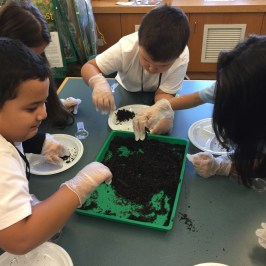
File_000 (1)Our first unit is “Animals Two by Two”. Students will observe and describe the structures and behaviors of an organism and then compare the organism to a similar one; guppies and goldfish, land snails and water snails and earth worms and night crawlers. Science concepts are animal behavior, aquarium, habitat, living and non-living things.

The second unit is “Wood and Paper”. Students observe, compare, and describe natural and synthetic materials such as wood, paper and fabric. They find out what happens when these materials interact with other materials. Students discover applications for the materials in the real world. Students will be recording their learning in their science journals. We will also be reading many nonfiction books that relate to the topics we are studying.

K0/K1 Science
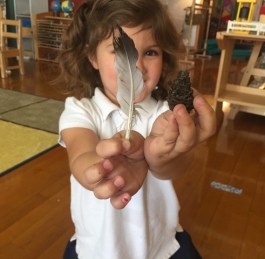
201-nature-walk-img_3088.jpegThe science for the K0/K1 is integrated into the Opening the World of Learning curriculum (OWL). In the first unit, “Family,” students will explore materials and objects in the environment and observe and identify the characteristics and basic requirements of living things.

In the second unit, “Friends,” students will observe, explore, and ask questions about materials and objects in the environment and explore the properties and behaviors of many kinds of materials. In the third unit, “Wind and Water,” students will investigate and describe states of matter, explore and discuss what air is an does, record observations by drawing, make predictions, and use simple measurement tools.

In the fourth unit, “The World of Color,” students will describe properties of and compare objects, observe and describe the effects of sunlight, investigate the dates of matter, and explore the properties of plants. In the fifth unit, “Shadows and Reflections,” students will learn about the characteristics and interactions of animals and continue to explore materials.

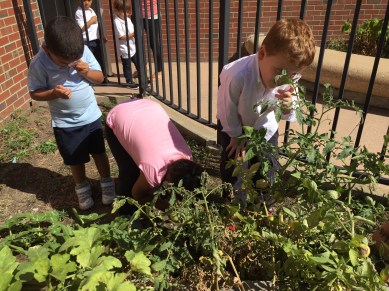
In the sixth unit, “Things that Grow,” students will be exploring the life cycle of a plant and making their own gardens.
201 Nature Walk IMG_4415.JPG

New Partnership With the deCordova Museum

I now have a partnership with the deCordova Museum in Lincoln, MA!

I am working with Julie Bernson, who reached out to me at the Wheelock College STEM Weekend. She is the Deputy Director for Learning and Engagement at the museum. Julie and I are working together to develop curriculum that builds on the existing Boston Public Schools science curriculum for Kindergarten and Grade 1. Students and their families from the EEC will be visiting the museum as well. The field trip for Kindergarten will focus on physical science. This is based on a unit that I am developing for kindergarten students. It is not a part of the Boston science curriculum, but will align with school and district goals. These goals are to to increase student engagement and involve students in cognitively demanding tasks that are developmentally appropriate.

There’s an app that you can use with you child to help them discover aicon350x350nd explore physics in daily life, such as on the playground. Using Playground Physics, you can record a video of yourself or your friends, tap points along the way to trace a path of motion and discover the motion, forces and energy involved. Users enter measurements (height of object, mass of object being tracked) to understand how a person’s potential or kinetic energy changes as he or she moves.
Grade 1

The current unit for Grade 1 science curriculum is focused on weather.

Sid_Science_Kid_Spotlight.jpg


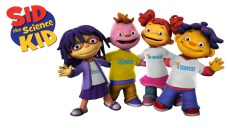
The Weather Wheel game on the Sid The Science Kid site is a great way to engage your child in weather-related STEM activities at home.


Screen Shot 2017-03-25 at 10.27.07 AM.pngThomas Edison’s Secret Lab is a STEM based animation series for children ages 5-9. Thomas Edison is brought back to life as a hologram and guides students through STEM related activities. It engages students in physical science, life science, earth science and space science, as well as other subjects. The site also introduces children to other famous scientists. The site has printable activities and games. TV episodes are available on Netflix.

9 places in the Boston area that will unleash your kids’ STEAM creativity

Looking for creative and educational activities for your young child?  Here is an article reposted from The Boston Globe.  Thank you, Jessica!

Fun activities for the whole family, no matter the forecast.


Over the past month, the weather has been warm and then cold, spring-y and then snowy. Literally. It’s not ideal for planning fun family adventures. But that doesn’t mean you have to throw in the towel and plop your kids in front of a TV. From painting and sewing to cooking and slime-ing, here are nine not-weather-dependent spots in the Boston area where your children can create, explore, and imagine—and maybe even discover a new talent or two.

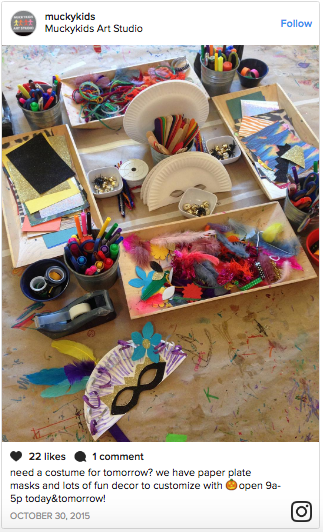
1. They can get crafty at Muckykids Art Studio

The cozy studio’s wide variety of tactile, arts and crafts, and painting projects changes weekly. Think: glittery puppets, laminated backpack charms, and even homemade slime. While instructions are provided and staff members are available to offer guidance, the beauty of Muckykids’s drop-in hours is letting your child experiment with the materials and use them as they wish—so be prepared for lots of messy fun. Classes are also available for kids between the ages of 18 months and 7 years. (1776 Massachusetts Ave., Cambridge; drop in Thursday, Friday, and Saturday from 9 a.m.-5 p.m.; $15 per child/per hour, no pre-registration necessary)

Screen Shot 2017-03-22 at 11.08.39 PM

2. Break out the tools at Home Depot and Lowe’s

Let your children explore their inner do-it-yourselfers at local Home Depot and Lowe’s stores. Each month, both chains offer free workshops and clinics especially designed for kids, inviting them to experiment with tools as they build wooden toy boxes, birdhouses, castles, and much more. Projects are generally aimed at kids between the ages of 5 to 12. Both programs fill up quickly, so advance registration is strongly recommended and can be done online. (Home Depot free kids workshops at select Home Depot stores nationwide; first Saturday of the month from 9 a.m.-12 p.m.;  free; register online) (Lowe’s Build and Grow clinics at select Lowe’s stores nationwide; select Saturday mornings; free; register online)

3. Discover their inner Picasso at Palette’s

You may have attended a paint bar with your friends; Palette’s Sunday afternoon family paint event is one of the best for your little Picassos. A resident artist will walk you and your children through the selected painting of the day, which could be anything from penguins to bumblebees to the beloved Make Way for Ducklings statue. It’s a blast to see how everyone in the class—parents and kids alike—interprets the same painting in completely different ways. Paintings are available to take home that day, so be prepared to create a gallery at home to display your masterpieces. Healthy munchies, as well as cupcakes, cookies, and other treats, are available for purchase. (29 Main St., Natick; Family Paint on Sundays at 1:30 p.m.; $25 per person, including supplies; online registration required)

Screen Shot 2017-03-22 at 11.07.48 PM.png

4. Explore the sciences at Parts and Crafts

Every Saturday afternoon, Parts and Crafts’s “family hackerspace” provides the real tools, gadgets, and materials (think 3-D printers, a wood shop, saws, craft supplies, and lots of LEDs) to create, collaborate, and even take stuff apart. The best part? Participation is free, although donations are welcome. (577 Somerville Ave., Somerville; Open Shop is on Saturdays from 12-2 p.m.; free/by donation)

5. Learn to sew at J.P. Knit & Stitch

This sunny yarn and fabric store in the heart of Jamaica Plain offers kids’ knitting and sewing clubs for new sewers and knitters (ages 8 to 13) so they can learn the basics in a relaxing, no-pressure environment. Their next four-session-long Friday Kids’ Sewing Club kicks off on April 1 at 4 p.m. (461 Centre St., Jamaica Plain; $100 plus materials; register online)

Screen Shot 2017-03-22 at 11.10.16 PM

6. Sketch away at the Museum of Fine Arts

Did you know families can stop by the Sharf Visitor Center at the Museum of Fine Arts and ask for a tote bag with drawing materials and activities? Then, as you go through the galleries, ask your kids to sketch their favorite works and see how they interpret some of the museum’s masterpieces. Or, try playing games like “I Spy,” or finding all the things that are blue in a particular gallery. Little details that may have been overlooked could spark your children’s imagination. Pick up the MFA’s Art Connections Card for other ways your kids can engage with the art during your visit. (465 Huntington Ave., Boston; see full schedule here; kids 6 and under are free; kids 7 to 17 are free during non-school hours; adults cost $25)

7. Paint their own pottery at Made by Me

Kids can drop by, select an unfinished (yet functional) piece of pottery—a vase, an ornament, a plate, a mug, a flower pot, a piggy bank—gather as many colors as they’d like, then get to work. The finished masterpiece is glazed, fired in the kiln, and becomes available for pick-up in six days. (1685 Massachusetts Ave., Cambridge; Monday-Saturday from 10 a.m.-9 p.m. and Sunday from 12-6 p.m.; cost dependent on piece chosen plus $4 per half-hour per painter)

Screen Shot 2017-03-22 at 11.11.33 PM.png

8. Cook up a storm at Whole Foods Dedham

Your little chefs (ages 9 to 12) can learn basic skills in the kitchen while they create healthy snacks and fun desserts…and even expand their sandwich repertoire. And at $5 a session, it’s quite the steal. The next class is scheduled for Sunday, April 24. Private cooking classes for kids ages 5 to 12 are also available. (Kids in the Kitchen program at Whole Foods Dedham, 300 Legacy Pl., Dedham; hours vary; $5; private kids’ cooking lessons are $40/hr; registration required)

9. String up some jewelry at Bead + Fiber

Beading is an easy skill for kids of all ages to master, yet still gets their creative juices flowing as they string together beads of varying colors, shapes, sizes, and textures. Over in the South End, Bead + Fiber’s introductory classes for kids include Stringing 101 and Kumihimo, or finger-loop braiding. (460 Harrison Ave., Boston; days, hours, and fees vary; register online)

Screen Shot 2017-03-22 at 11.12.19 PM.png

Story Stems: Students’ Recreated Versions of Goldilocks and the Three Bears

Before winter vacation, we read different versions of Goldilocks and the Three Bears. Students followed the engineering process and came up with their own “redesigns” of beds for the characters in the story. Students also wrote their own versions of the story and acted them out using the figures.

Check out the following slideshw for photos and phrases shared among students during the activity!


This slideshow requires JavaScript.


A Growth Mindset

“A connected teacher with a growth-mindset is more important than any robotic device.”

~ Amy Westman

“If the mind of a student isn’t engaged, understanding and content mastery don’t stand a chance; If the mind and heart together aren’t engaged, long-term retention and transfer of understanding and content mastery are unlikely as well.”

~ Read in an Edutopia article

 
img_5199.jpgKindergarten Wood and Paper Unit

The Kindergarten Scientists have been introduced to a variety of wood (and paper later on in the unit) in a systematic way. They’re observing properties of wood and discovering what happens when they test and interact with pine, plywood, partial board and basswood. Young scientists are learning that wood can be recycled to create new forms that have different properties. They’re making comparisons between different types of wood and the concept of trees as an important resource.

Quotations From Students:

Adam and Samuel – “We built a birdhouse out of wood from a tree that lived in a forest.”

Nasir – “I’m building a tree house with pine wood.”

Mateo – “I’m building a tree house 8 stories high.”

Imani, Cela, and Aaron – “We are still working on a door to go into spaces. Imani is building a backyard that you can get to through the door.  Then, we are going to make a big house.”

Juancamilo – “There is a slide – the watch-out slide!  There are lasers [and] a knife machine that cuts. Superman destroyed the watch-“

Olive – “We are building a structure and we are working together. Everyone has a job but I’m the boss.”


Grade 1 Liquids and Solids

The first grade scientists are investigating the similarities and differences in a variety of common solids and liquids like syrup, soap, glue, and water. First, they observed, described and compared a collection of solid objects located in the science/library. Next they are focusing on color, shape, texture, and hardness. They’re experimenting with objects rolling, stacking, floating, sinking as well as whether the objects are attracted to a magnet.

We will move on to the investigation of liquids after February break. Scientists will investigate how various liquids look and feel, their fluidity, how they mix water, and their degree of absorption.

Quotations From Students:

Carlos – “We are predicting what will happen to the solid metal ball when we blow the air from the straw.”

Angel – “I’m testing which solids move slow or quickly. If it’s heavier it’s going to move slower and if it’s lighter it will move faster. Some solids like the metal ball can spin if you pinch it with your finger.”